

|
1kits(10Vials)
| Quantity: | |
|---|---|
▎Epitalon Structure
Source: PubChem |
Sequence: Ala-Glu-Asp-Gly Molecular Formula: C14H22N4O9 Molecular Weight: 390.35 g/mol CAS Number: 307297-39-8 PubChem CID: 219042 Synonyms: Epithalon |
▎MOTs-C Research
Molecular Background
Epitalon, also known as Epithalon or Epithalone, is a synthetic tetrapeptide composed of alanine, glutamic acid, aspartic acid, and glycine (Ala-Glu-Asp-Gly, AEDG). It was developed on the basis of the amino-acid composition of Epithalamin, a bovine pineal polypeptide extract. PubChem lists Epitalon under CID 219042, with the molecular formula C14H22N4O9 and a molecular weight of 390.35 g/mol.[1,10]
Most published sources represent Epitalon as the conventional alpha-linked tetrapeptide H-Ala-Glu-Asp-Gly-OH. Storozhok, N. M., and colleagues published an alternative structure in which the glutamic-acid and aspartic-acid residues were connected through side-chain carboxyl groups. A recent review noted that this 'double-gamma bonded' representation is unusual and has not been commonly reported elsewhere in the Epitalon literature.[1,2]
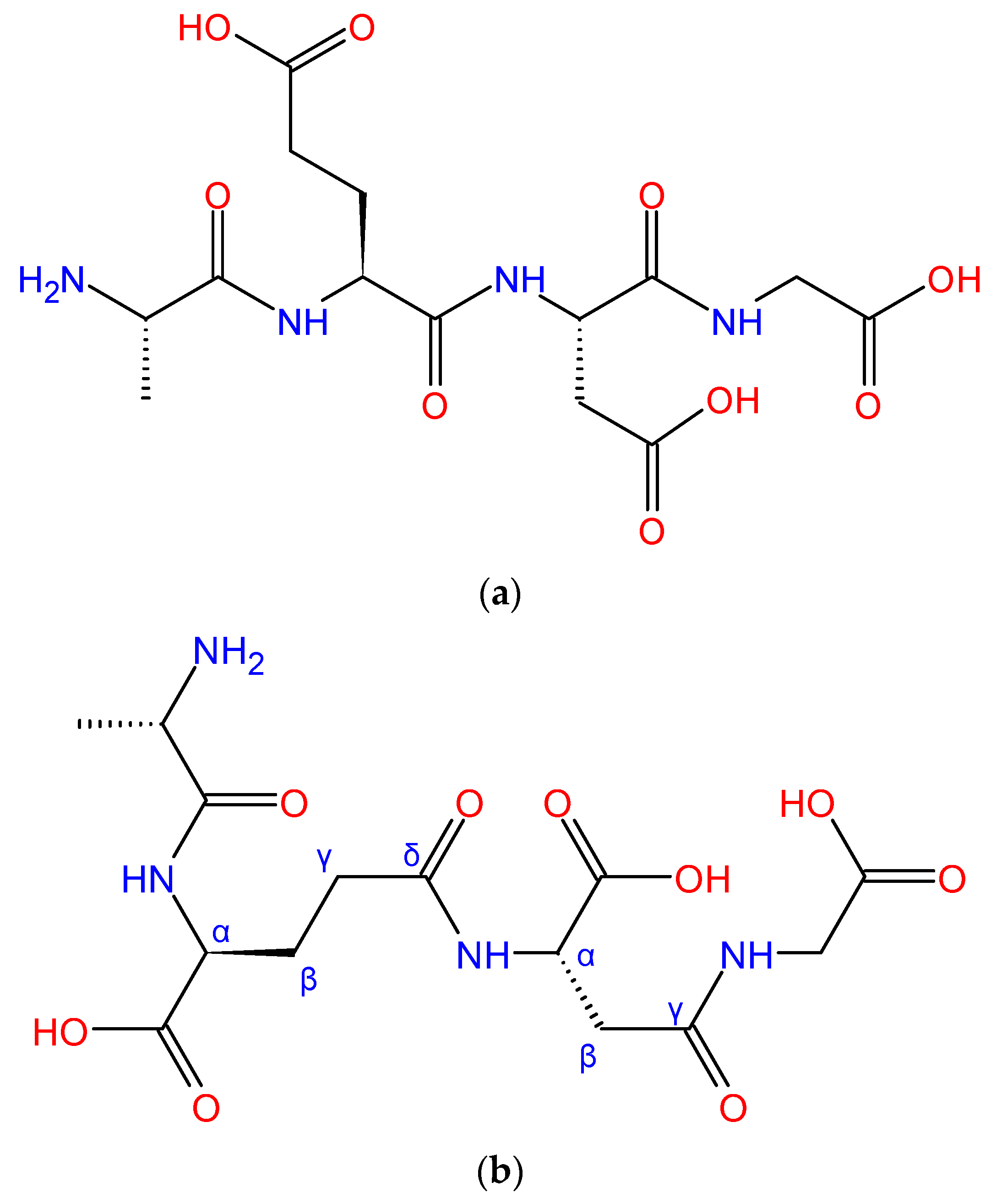
Fig1. Chemical structure commonly assigned to Epitalon (a) and the rarely reported 'double-gamma bonded' representation (b).[1]
Research Progress
Khavinson and colleagues studied Retinalamin, a polypeptide preparation isolated from the retina, and Epithalon in cultures of retinal and pigmented epithelial cells. The authors reported that both preparations, at selected experimental concentrations, increased proliferative activity in these cell cultures. The findings were obtained in vitro and describe the specific culture conditions used in the study.[3]
Khavinson and colleagues studied Epithalon in Campbell rats by administering the peptide to offspring during postnatal development and, in another group, to mothers before mating and during pregnancy as well as to their offspring. The authors reported that retinal morphology and functional activity were preserved for a longer period than in untreated controls and for longer than in animals exposed only during postnatal development.[4] These observations were obtained in an animal model and do not establish effects in humans.
Khavinson and colleagues examined Epithalon and Vilon in cultured rat pineal cells, with and without norepinephrine. Melatonin in the culture medium and the expression of arylalkylamine-N-acetyltransferase (AANAT) and phosphorylated CREB (pCREB) were measured. The authors reported that Epithalon increased AANAT and pCREB expression and increased melatonin levels under the conditions of the pinealocyte culture model.[5]
Rosenfeld, S. V., and colleagues measured chromosome aberrations in bone-marrow cells from SAMP-1, SAMR-1, and SHR female mice. Epithalon exposure beginning at two months of age was associated with reductions in chromosome-aberration frequency of 20%, 30.1%, and 17.9%, respectively, compared with age-matched controls. In SHR mice, the melatonin comparison used in the study did not produce a significant change in this endpoint.[6]
Teimuraz Lezhava and colleagues studied cultured lymphocytes obtained from healthy individuals in two age groups and examined Epitalon and Livagen alone and in combination with nickel, cobalt, and zinc ions. The investigators measured chromatin condensation, chromosome aberrations, and sister-chromatid exchanges. They reported greater chromatin decondensation in lymphocytes from older donors and lower frequencies of heavy-metal-associated chromosome aberrations in peptide-treated cultures.[7] These findings were generated in cultured lymphocytes and should be interpreted within that in vitro experimental system.
Xue Yue and colleagues added Epitalon to the culture medium of mouse oocytes undergoing post-ovulatory aging in vitro and evaluated oocyte quality after 6, 12, and 24 hours. At 0.1 mM, the authors reported lower intracellular reactive oxygen species, fewer spindle defects and abnormalities in cortical-granule distribution at later time points, higher mitochondrial membrane potential and mitochondrial DNA copy number, and lower apoptosis measurements after 24 hours.[8]
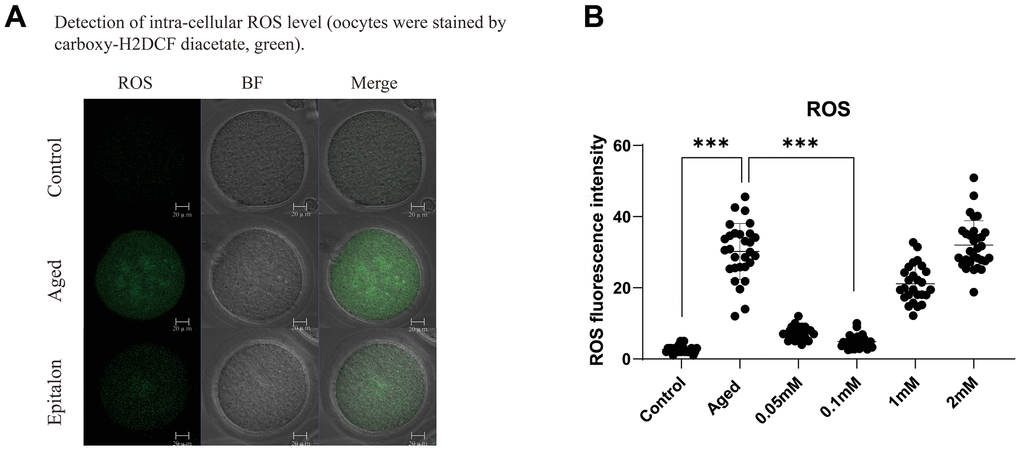
Fig2. Intracellular ROS measurements reported in mouse oocytes during post-ovulatory aging in vitro after Epitalon exposure.[8] The figure and statistical comparisons are reproduced from the cited study.
Francesco Avolio and colleagues studied five peptide preparations, including Epitalon, in THP-1 monocytes and PMA-differentiated macrophage-like cells. The investigators measured proliferative signaling, cytokine release after LPS stimulation, STAT signaling, and adhesion to activated HUVEC monolayers. Across the peptide-treated groups, the authors reported changes in mitogen-activated kinase phosphorylation, lower TNF and IL-6 release after LPS stimulation, and reduced adhesion to activated endothelial cells.[9] Because several peptides were evaluated in the same study, these results should not be attributed to Epitalon beyond the specific data reported for that experimental group.
Research Limitations
The published Epitalon literature includes cell-culture experiments, animal studies, and a limited number of structural and physicochemical investigations. A 2025 review noted that the precise molecular mechanism of the tetrapeptide remains unverified and that structural and physicochemical research is comparatively limited.[1] In addition, the studies above use different species, cell types, exposure conditions, and experimental endpoints, so their results are not directly interchangeable and do not by themselves establish clinical safety or efficacy in humans.
COCER Peptides presents Epitalon solely for laboratory research and analytical use. It is not intended for human or veterinary use. The research described above summarizes findings reported in third-party publications and is not a statement of clinical efficacy, safety, diagnosis, treatment, prevention, or an instruction for use.


