
 By Cocer Peptides
 May 26, 2025
Oxytocin Research Reagent is a high-purity, synthetic cyclic nonapeptide produced as a standardized chemical reagent for non-clinical neurobiological and biochemical research. Designed to study oxytocinergic signaling pathways, it serves as an analytical standard for investigating receptor binding affinity across subcortical and cortical target structures, including the amygdala, hippocampus, and prefrontal cortex. Structurally, oxytocin features an intramolecular disulfide bond between two cysteine residues. Its primary signal transduction mechanism involves binding to the oxytocin receptor (OXTR), a G-protein-coupled receptor widely expressed across central nervous system regions that modulate social cognition, stress responsiveness, and downstream monoaminergic pathways such as dopamine and serotonin signaling.
In preclinical models and human clinical research, investigators evaluate intranasal oxytocin to characterize its effects on social communication, emotional processing, and neural network dynamics in the context of Autism Spectrum Disorder (ASD). Controlled experimental models measure endpoints such as Social Responsiveness Scale (SRS) scores, biological motion processing in the posterior superior temporal gyrus via functional magnetic resonance imaging (fMRI), and amygdala reactivity. Additionally, research explores cellular markers, including alterations in oxytocin receptor gene (OXTR) DNA methylation and changes in peripheral salivary oxytocin concentrations following exogenous administration.
In global medical literature and systematic reviews, oxytocin is examined across both single-dose experimental challenge studies and multi-week clinical trials involving children, adolescents, and adults. While early small-scale studies and specific sub-analyses reported transient changes in eye gaze or secondary behavioral scales, large-scale Phase 2 randomized controlled trials (such as findings published in the New England Journal of Medicine) demonstrated no statistically significant difference between intranasal oxytocin and placebo groups on primary social withdrawal subscales. Regulatory authorities worldwide, including the US Food and Drug Administration (FDA), have not approved oxytocin for the treatment, management, or mitigation of core symptoms in Autism Spectrum Disorder, and it remains classified as an investigational peptide in neuropsychiatric research.
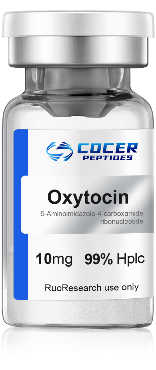
Product available for research use only:
ALL ARTICLES AND PRODUCT INFORMATION PROVIDED ON THIS WEBSITE ARE SOLELY FOR INFORMATION DISSEMINATION AND EDUCATIONAL PURPOSES.
The products provided on this website are intended exclusively for in vitro research. In vitro research (Latin: *in glass*, meaning in glassware) is conducted outside the human body. These products are not pharmaceuticals, have not been approved by the U.S. Food and Drug Administration (FDA), and must not be used to prevent, treat, or cure any medical condition, disease, or ailment. It is strictly prohibited by law to introduce these products into the human or animal body in any form.