
 By Cocer Peptides
 June 4, 2025
Thymosin Alpha-1 (T-alpha-1) is an acidic polypeptide consisting of 28 amino acids originally isolated from thymus tissue fraction 5. As an endogenous peptide derivative, it is widely studied in cellular and molecular immunology for its interactions with immune cell signaling, differentiation pathways, and cytokine dynamics. Structurally, the molecule features a highly conserved sequence across mammalian species. In biochemical research, T-alpha-1 serves as a primary model for examining how thymic peptides influence maturation pathways of hematopoietic progenitor cells and modulate intracellular signal transduction cascades.
In laboratory and preclinical settings, researchers evaluate T-alpha-1 to characterize its interactions with both adaptive and innate immune components. Experimental models show that the peptide interacts with pattern recognition receptors, such as Toll-like receptors (TLRs) on macrophages and dendritic cells, initiating downstream intracellular signaling cascades. In vitro assays demonstrate its ability to influence T-cell precursor differentiation, alter cytotoxic responses in natural killer (NK) cells, and modulate the transcription of key immunoregulatory enzymes, including indoleamine 2,3-dioxygenase (IDO). Additionally, scientific literature measures the peptide’s correlation with shifts in cytokine expression profiles, observing bidirectional regulatory responses involving both Th1-type cytokines (such as interferon-gamma) and pro-inflammatory signaling proteins (such as IL-6 and TNF-alpha) under varying experimental conditions.
In global scientific and medical literature, T-alpha-1 is examined across diverse research contexts, including chronic viral infections, oncology co-therapies, septic immune dysfunction, and congenital immunodeficiency models. Published clinical trials and meta-analyses explore endpoints such as CD4+ T-lymphocyte counts, immune reconstitution markers, and adjunctive responses when combined with antiretroviral agents or cytotoxic chemotherapy. Regulatory status for T-alpha-1 varies substantially by country; while approved as a prescription drug in several jurisdictions outside the United States for conditions such as chronic hepatitis B, hepatitis C, and select oncologic indications, Thymosin Alpha-1 remains an unapproved investigational compound within the United States without FDA approval for clinical use.
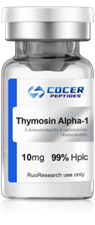
Product available for research use only:
ALL ARTICLES AND PRODUCT INFORMATION PROVIDED ON THIS WEBSITE ARE SOLELY FOR INFORMATION DISSEMINATION AND EDUCATIONAL PURPOSES.
The products provided on this website are intended exclusively for in vitro research. In vitro research (Latin: *in glass*, meaning in glassware) is conducted outside the human body. These products are not pharmaceuticals, have not been approved by the U.S. Food and Drug Administration (FDA), and must not be used to prevent, treat, or cure any medical condition, disease, or ailment. It is strictly prohibited by law to introduce these products into the human or animal body in any form.