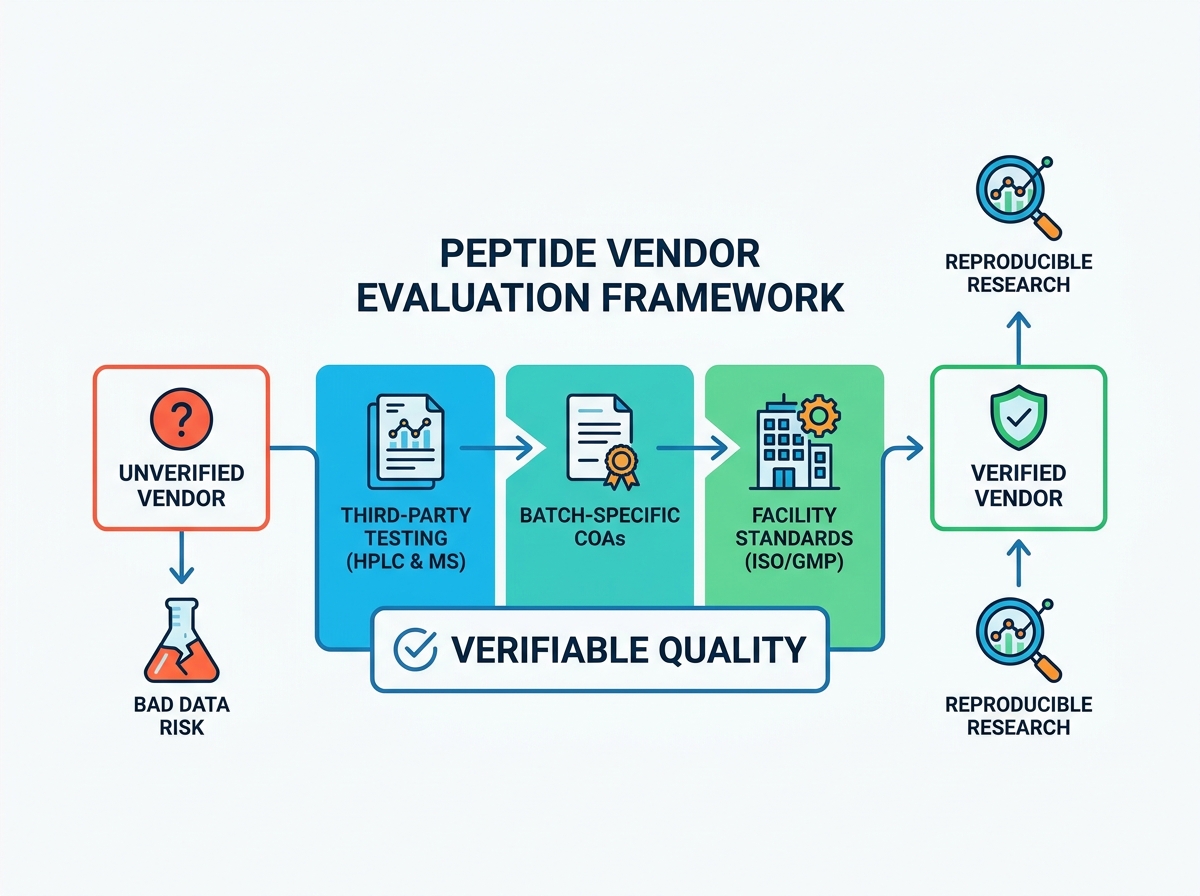
Choosing the right peptide company is not simply a matter of comparing prices or advertised purity. Different suppliers serve different research needs. Some focus on catalog peptides, while others specialize in custom synthesis, pharmaceutical development, or large-scale GMP manufacturing.
The best peptide supplier should provide reliable analytical documentation, consistent product quality, appropriate manufacturing capability, responsive support, and a product format that matches the research project.
This guide ranks several recognized peptide companies based on their strongest use cases and explains what researchers should evaluate before placing an order.
Table of Contents
Toggle
How We Ranked the Best Peptide Companies
Peptide Identity and Purity
Reliable suppliers should provide both HPLC and mass spectrometry results.
HPLC helps evaluate purity, while mass spectrometry helps confirm that the material matches the expected molecular weight. A purity claim such as “99%” is more meaningful when it is supported by batch-specific analytical data.
Batch-Specific Documentation
A useful Certificate of Analysis should correspond to the exact production batch being purchased.
Researchers should look for:
Product and sequence information
Batch number
HPLC purity
Mass spectrometry results
Theoretical and observed molecular weight
Storage recommendations
Testing date
Generic or outdated COAs provide less confidence than documents linked to the current lot.
Manufacturing Capability
Peptide synthesis can become difficult when sequences are long, hydrophobic, aggregation-prone, or highly modified.
Strong suppliers should be able to manage:
Complex sequences
Peptide purification
Terminal modifications
Fluorescent labeling
Cyclization
Disulfide formation
Custom packaging and quantities
Batch Consistency
Repeatable research requires consistent material. Researchers planning long-term projects should ask whether the supplier follows the same release specifications for every batch and whether material from one lot can be reserved.
Technical Support and Overall Value
The cheapest peptide is not always the most cost-effective option. Poor documentation or inconsistent quality can lead to repeated testing, failed experiments, and project delays.
The best value comes from a balance of quality, documentation, service, availability, and price.
Best Peptide Companies for Research: Quick Comparison
Rank
Company
Best for
Main strength
1
Cocer Peptides™
General research peptide procurement
Accessible catalog and research-focused supply
2
GenScript
Custom peptide synthesis
Broad modification and synthesis capabilities
3
Bachem
GMP and pharmaceutical manufacturing
Regulatory and scale-up experience
4
Phoenix Pharmaceuticals
Academic and biomedical research
Large peptide and assay catalog
5
Biosynth
Research-to-commercial projects
Broad biochemical manufacturing support
The best choice depends on the required peptide, quantity, documentation, modification, and manufacturing scale.
1. Cocer Peptides™ — Best Overall for Research Peptide Procurement
Cocer Peptides™ supplies a broad range of research-focused peptide products and supports researchers looking for accessible catalog sourcing, direct communication, and international supply.
The company is best suited to laboratories that already know which peptide they need and want to compare availability, specification, documentation, packaging, and pricing.
Why Cocer Peptides™ Stands Out
Cocer Peptides™ focuses on several factors that matter to research buyers:
High-purity research peptides
Broad catalog availability
Batch-related quality documentation
HPLC and mass spectrometry verification
Direct technical communication
International shipping
Support for repeat and bulk requirements
Its strongest position is general research procurement rather than pharmaceutical API manufacturing.
What Researchers Should Verify
Before ordering, buyers should request:
A batch-specific COA
HPLC chromatogram
Mass spectrometry report
Lot number
Molecular weight data
Counterion information
Storage recommendations
These checks help confirm that the purchased material matches the supplier’s stated specification.
Best For
Cocer Peptides™ is suitable for:
Independent laboratories
Biotechnology research teams
Catalog peptide buyers
Smaller research orders
Repeat purchasing
International research procurement
Researchers requiring clinical-grade APIs, regulatory filing support, or commercial GMP production may need a pharmaceutical CDMO instead.
2. GenScript — Best for Custom Peptide Synthesis
GenScript is a strong choice for projects requiring customized sequences, modifications, peptide libraries, or specialized analytical support.
Its custom peptide services may include:
Novel sequences
Terminal modifications
Fluorescent labels
Peptide conjugation
Cyclization
Stable isotope labeling
Peptide libraries
Larger synthesis scales
GenScript is especially useful when a required peptide is not available in a standard catalog.
Best For
University laboratories
Drug discovery teams
Antibody development
Modified peptides
Peptide libraries
Complex synthesis projects
For simple catalog purchases, its custom-service process may be more extensive than necessary.
3. Bachem — Best for GMP and Pharmaceutical Manufacturing
Bachem is one of the most established companies in pharmaceutical peptide development and manufacturing.
Its strengths include:
GMP production
Process development
Scale-up manufacturing
Regulatory support
Commercial peptide supply
Long-term pharmaceutical partnerships
Bachem is most suitable for biotechnology and pharmaceutical companies moving from development toward clinical or commercial production.
Best For
Pharmaceutical development
Clinical programs
GMP peptide APIs
Large-scale manufacturing
Regulatory-driven projects
It may not be the most practical option for researchers purchasing small quantities of common catalog peptides.
4. Phoenix Pharmaceuticals — Best for Academic Research
Phoenix Pharmaceuticals offers research peptides, antibodies, and assay products for biomedical and academic laboratories.
Its broad catalog is particularly relevant to researchers working in areas such as endocrinology, neuroscience, metabolism, and cell signaling.
Best For
Academic laboratories
Biomedical research
Peptide assays
Antibody-related projects
Established catalog products
Researchers should still confirm batch availability, analytical documentation, and expected delivery time before ordering.
5. Biosynth — Best for Research-to-Commercial Supply
Biosynth provides peptides and other biochemical products across research, development, and manufacturing stages.
Its main advantage is the ability to support projects as requirements grow from early research toward larger-scale supply.
Best For
Biotechnology companies
Translational research
Scale-up projects
Custom biochemical sourcing
Commercial supply planning
The suitability of Biosynth depends on the specific peptide, required quantity, analytical package, and manufacturing standard.
How to Choose the Right Peptide Company
Match the Supplier to the Project
A catalog supplier is usually suitable for established peptides and smaller quantities. A custom synthesis provider is more appropriate for novel sequences or modifications. A GMP manufacturer is necessary when the peptide is intended for regulated pharmaceutical development.
Review Analytical Documents
Researchers should not rely only on website claims. Review the COA, HPLC data, mass spectrometry results, lot number, and molecular weight before purchasing.
Compare Total Research Cost
A low purchase price may not represent real value if the product requires additional testing or causes inconsistent results.
Consider:
Analytical confidence
Shipping reliability
Technical support
Batch consistency
Replacement policy
Long-term availability
Begin With a Smaller Order
For a new supplier, a smaller initial order allows the research team to evaluate packaging, documentation, communication, and product consistency before committing to larger quantities.
Common Mistakes When Comparing Peptide Companies
Choosing Only by Price
Very low pricing may reflect reduced testing, limited documentation, or inconsistent production.
Accepting Generic COAs
A COA should match the batch on the product label. A document from an earlier production run does not verify the current material.
Confusing Purity With Identity
HPLC purity alone does not fully confirm molecular identity. Mass spectrometry should also be reviewed.
Ignoring Project Scale
A supplier that works well for a small research order may not be suitable for GMP production. Likewise, a large pharmaceutical manufacturer may be unnecessary for a basic catalog purchase.
Frequently Asked Questions
What Is the Best Peptide Company for Research?
The best company depends on the project. Cocer Peptides™ is a practical option for general research procurement, GenScript is stronger for custom synthesis, and Bachem is better suited to GMP and pharmaceutical-scale manufacturing.
How Can Researchers Verify Peptide Quality?
Review batch-specific COAs, HPLC chromatograms, mass spectrometry results, lot information, molecular weight, storage guidance, and supplier quality procedures.
Is 99% Purity Enough?
Not by itself. Researchers should also confirm peptide identity, batch number, net content when available, and the analytical method used to produce the purity result.
Which Companies Offer Custom Peptide Synthesis?
GenScript, Bachem, Biosynth, and other specialized manufacturers offer custom synthesis. Cocer Peptides™ may also be contacted regarding specific sourcing, bulk, or customized research requirements.
Conclusion
There is no single peptide company that is best for every research project.
Cocer Peptides™ is a strong option for accessible research peptide procurement, especially for buyers seeking catalog availability, direct communication, analytical documentation, and international supply.
GenScript is better suited to customized sequences and complex modifications. Bachem is more appropriate for GMP development and pharmaceutical manufacturing. Phoenix Pharmaceuticals and Biosynth serve more specialized academic and scale-up needs.
Before selecting a supplier, researchers should verify the exact batch documentation, confirm that the company can support the required quantity and specification, and compare total research value rather than price alone.
A dependable peptide company should make it easier—not harder—to understand what is being purchased, how it was tested, and whether it is suitable for the intended research application.