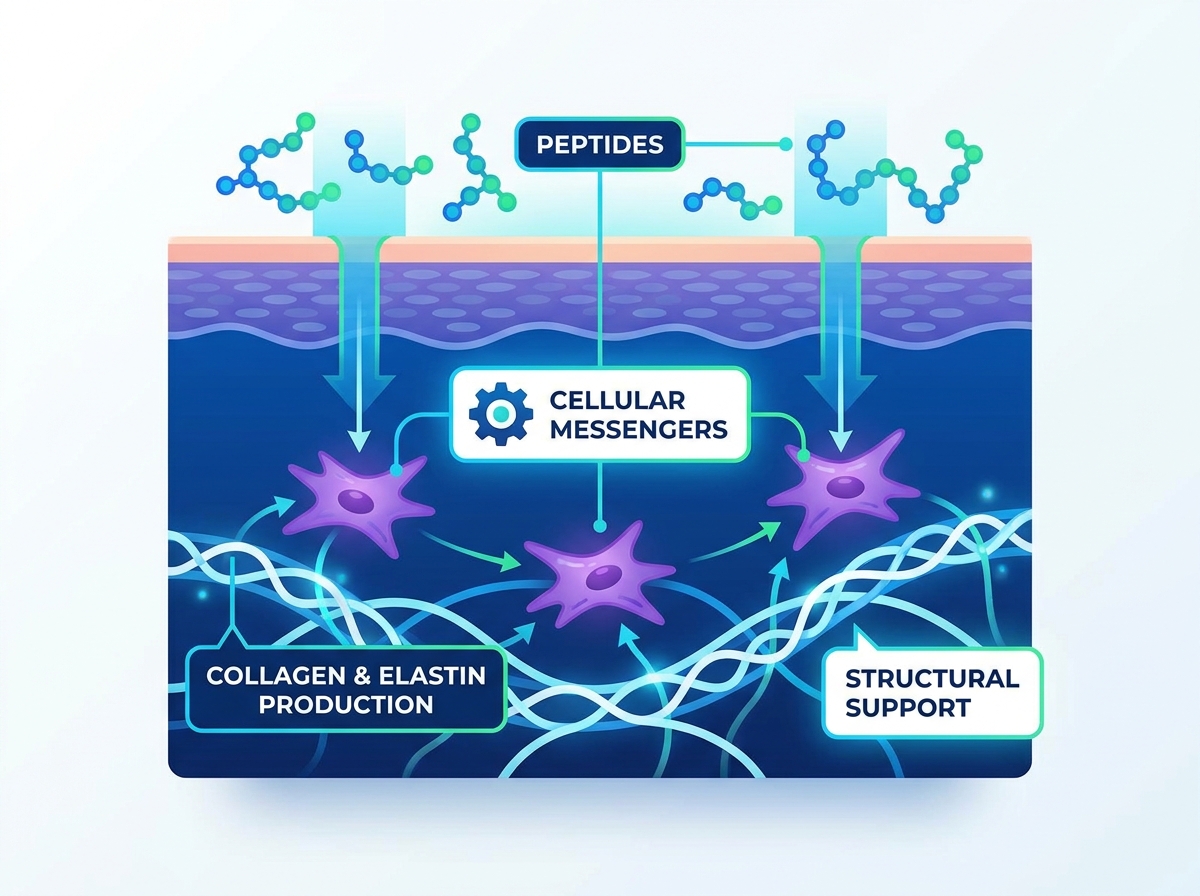
The beauty market constantly bombards us. Brands push endless "anti-aging" miracles every single day. You probably see peptides highlighted across countless serums right now. What are they exactly? They are short chains of amino acids. They act as fundamental biological building blocks. They form vital structural proteins. Collagen, elastin, and keratin rely heavily on them. Without them, our skin gradually loses firmness and resilience. Clinical data absolutely supports their biological effectiveness. However, not all formulas actually work on your face. Many expensive products fail to deliver visible results. Poor chemistry and bad packaging often cause this failure. This guide thoroughly cuts through the heavy marketing noise. We give you a clear, dermatologist-aligned framework today. You will learn exactly how to evaluate these molecules. We teach you to select and use these powerful ingredients properly. Read on to build a truly functional, evidence-based skincare regimen.
Table of Contents
Toggle
Key Takeaways
Biological Function: Peptides function primarily as cellular messengers, signaling the skin to repair itself and synthesize structural proteins.
Formulation Dictates Efficacy: A product's effectiveness relies entirely on molecular stability, delivery systems, and proper packaging (e.g., opaque, airless pumps) to prevent degradation.
Realistic Benchmarks: Peptides offer cumulative, long-term structural support, not instant "Botox-like" paralysis, despite common marketing claims.
Strategic Implementation: Maximum ROI requires pairing peptides with synergistic ingredients (like ceramides and hyaluronic acid) while carefully managing active conflicts (like strong AHAs).
The Clinical Mechanism: How Peptides Actually Function
Consumers frequently buy these active ingredients expecting instant miracles. They want immediate surface-level exfoliation. Many hope for sudden skin tightening. However, biological success criteria depend completely on cellular communication. The molecules do not act like traditional exfoliating acids. They do not scrub away dead cells. They send targeted messages deep into your dermis.
Signal Peptides
These specific molecules act as vital biological messengers. They trigger your fibroblasts efficiently. This targeted action increases native collagen production. They also boost elastin and fibronectin synthesis. These three proteins form your essential structural foundation. Without them, gravity takes over rapidly. Signal molecules remind older cells to behave like much younger ones. They encourage constant structural renewal.
Carrier Peptides
Trace minerals play a massive role in tissue health. Copper serves as a prime example here. Carrier molecules deliver these trace minerals directly. They bind to copper safely. They transport it to enzymatic processes inside your skin. This process facilitates rapid wound healing. It speeds up tissue repair significantly. You will see less redness over time. Your barrier becomes visibly stronger.
Enzyme-Inhibitor & Neurotransmitter Peptides
These variants sound incredibly futuristic on a label. They specifically target muscle contraction pathways. They also block the enzymatic breakdown of native collagen. They slow down structural degradation beautifully. However, we must frame realistic limits here. Topical creams cannot match injectable neurotoxins. They gently relax superficial micro-tension. They do not freeze your forehead muscles completely. Expect subtle softening, not total paralysis.
Evaluating Peptide Formulations: Separation of Fact from Hype
Implementation reality dictates formulation success entirely. These chains are relatively large molecules. They are notoriously water-soluble. They struggle to penetrate your protective lipid barrier naturally. Brands must utilize smart chemistry. They need chemical encapsulations. Specialized delivery vehicles remain absolutely necessary. If a brand ignores penetration enhancers, the product fails. The active ingredients just sit on your face unabsorbed.
Concentration & INCI Verification
You must read the ingredient label carefully. Ignore the front packaging marketing completely. Look for specific, clinically tested compounds. Palmitoyl Pentapeptide-4 serves as a fantastic benchmark. Copper Tripeptide-1 boasts decades of robust clinical research. Avoid vague "peptide complex" claims entirely. Brands often hide these useless terms at the very bottom. A tiny drop does nothing for your skin. The active compounds must appear reasonably high on the list.
Product Format Matter
You should always invest in leave-on products. Serums and moisturizers represent vastly superior investments. Wash-off products remain a massive waste of money. Cleansers lack sufficient contact time completely. The molecules wash down the drain instantly. They disappear before any cellular signaling ever occurs. You must give them hours to penetrate and communicate.
Skincare Format Efficacy Comparison
Product Format
Contact Time
Efficacy Level
Primary Function
Dedicated Serum
8-12 hours
Very High
Deep cellular signaling and targeted repair.
Rich Moisturizer
8-12 hours
High
Barrier support and prolonged hydration.
Liquid Toner
Variable
Moderate
Surface hydration and mild priming.
Wash-off Cleanser
60 seconds
Very Low
Simply removes dirt. Waste of active ingredients.
How to Combine Peptides with Other Skincare Ingredients
These amino acid chains are notoriously fragile. Highly acidic environments can destroy them quickly. L-ascorbic acid poses a significant structural risk. High-percentage AHAs or BHAs can hydrolyze them easily. Acidic pH levels destabilize the formulation entirely. You lose all potential biological benefits. You must separate these specific active ingredients across your routine.
Best Ingredients to Use with Peptides
Some ingredient combinations yield incredible clinical results. Retinoids pair beautifully alongside them. You use peptides to support your delicate skin barrier. Meanwhile, retinoids safely accelerate cellular turnover. They offset potential irritation perfectly. Ceramides and niacinamide also pair exceptionally well. Together, they build a comprehensive barrier-repair protocol. Your skin becomes deeply resilient and remarkably calm.
How to Introduce Peptides into Your Routine
Always patch-test new active serums first. Apply a small drop behind your ear. Wait twenty-four hours to observe any reactions. Phase them into your PM routine slowly. Establish a solid baseline tolerance first. Then, you can safely increase application frequency. Rushing causes unnecessary irritation and barrier damage.
Low pH destroys the chains. Use C in AM, others in PM.
Strong AHAs/BHAs
Poor / Caution
Acids hydrolyze the proteins. Alternate usage days strictly.
Understanding Peptide Results and Limitations
Let us compare outcomes transparently. Topical creams differ vastly from clinical interventions. Neuromodulators paralyze muscle tissue dynamically. Lasers resurface your skin deeply and aggressively. Topical formulas work gradually underneath the surface. They never offer sudden overnight transformations. We must reject the "Botox in a bottle" marketing myth completely.
How Long Does It Take for Peptides to Work?
You must set a realistic evaluation period. Biology takes significant time to respond properly. You need 8 to 12 weeks of consistent use. Do not assess your return on investment before this window closes. Fibroblasts need time to synthesize new collagen layers. Skin cycles take roughly 28 days naturally. You absolutely need multiple cycles to see structural changes.
What Peptides Can and Cannot Do
Acknowledge their functional boundaries clearly. They cannot reverse severe photoaging alone. Deep dynamic rhytides require direct medical intervention. Sagging jowls will not lift from a topical serum. They act primarily as a supportive daily measure. They provide excellent preventative maintenance over the years. They aggressively protect the structural integrity you currently possess.
How to Choose the Right Peptide Product
Selecting the right formulation requires discipline. You must look past pretty packaging and celebrity endorsements. Follow these strict steps to ensure you buy a functional product. Your routine depends on high-quality chemistry.
Step 1: Identify the Primary Skin Goal
Match the chemical category precisely to your specific concern.
Choose copper variants for post-procedure recovery and severe barrier repair.
Select signal variants to target emerging fine lines and loss of firmness.
Pick neurotransmitter-inhibiting variants for superficial expression lines.
Do not buy a random formula hoping for the best. Know your primary objective first.
Step 2: Audit the Packaging
Packaging dictates product lifespan heavily. Immediately disqualify products housed in clear glass jars. Light degrades sensitive ingredients rapidly. Open tubs pose severe oxidation risks constantly. Contamination happens every single time you dip your fingers inside. Choose opaque, airless pump bottles strictly. They preserve the molecular integrity perfectly.
Step 3: Assess the Total Formulation
Look for highly comprehensive ingredient formulas. They should include heavy hydrators naturally. Glycerin and hyaluronic acid represent vital additions. They keep your stratum corneum intensely hydrated. Hydrated skin remains plump enough to facilitate optimal cellular signaling. Dry skin blocks molecular communication entirely. You need a well-rounded vehicle for delivery.
Next-Step Actions
Guide your purchasing decisions logically today.
Audit your current routine for any obvious redundancies first.
Check your cabinets for glaring acidic conflicts.
Remove competing products or plan an AM/PM split.
Select a targeted, airless-pump serum from a reputable clinical brand.
Do this before making any new financial investment.
Conclusion
These powerful amino acid chains remain a scientifically sound ingredient. They provide a vital foundation for long-term skin health. They genuinely work when you understand their precise biological mechanisms. However, stable formulations matter more than anything else. You must select products housed in airless, opaque packaging. Your expectations must remain clinically realistic at all times. They rebuild structural integrity gradually, rather than erasing wrinkles overnight.
We highly encourage you to prioritize stability and delivery systems. Value these factors far above high-percentage marketing claims. A well-formulated, low-concentration serum outperforms a poorly formulated, high-concentration tub every time. If you face severe dynamic wrinkles, consult a board-certified dermatologist. They can assess your targeted concerns accurately. Otherwise, explore a curated selection of clinically validated, stability-tested serums to protect your future skin.
FAQ
Q: Are peptides safe to use during pregnancy?
A: Yes, they generally possess an excellent safety profile. Because they are native building blocks, topical application rarely causes systemic issues. However, formulations vary greatly across brands. Always consult your OB-GYN or a board-certified dermatologist before introducing new active ingredients during pregnancy.
Q: Can I use peptides and Vitamin C together?
A: You should proceed with caution. Pure Vitamin C (L-ascorbic acid) requires a highly acidic pH to remain stable. This harsh acidity can hydrolyze and destroy delicate amino acid chains. For maximum efficacy, apply your Vitamin C serum in the morning and save these repairing ingredients for your evening routine.
Q: Do peptides cause skin purging or breakouts?
A: No, they do not directly cause skin purging. They do not accelerate cellular exfoliation like AHAs or retinoids. If you experience breakouts, the culprit is likely the product's base formulation. Heavy carrier oils or thick silicones in the serum might cause unexpected pore congestion.
Q: What is the difference between collagen and peptides?
A: Think of collagen as a completed brick wall. It is a massive, whole protein too large to penetrate the skin topically. Peptides are the individual bricks and the instruction manual. They penetrate deeply and signal your body to build more of that strong collagen wall naturally.