Peptides are short chains of amino acids that play essential roles in many biological processes. Today, peptide-based therapies are used to treat conditions such as diabetes, hormone deficiencies, osteoporosis, and certain cancers, while many other peptides continue to be studied in medical research. In this guide, you'll learn what peptides are used for, how they work, and the key safety considerations before using peptide-based products.
Table of Contents
Toggle
Key Takeaways
Established baseline: Peptides are already mainstream; well-known medications like insulin and GLP-1s (e.g., semaglutide) are technically peptide therapies.
Targeted outcomes: Clinical applications primarily focus on metabolic regulation, tissue repair, and hormonal optimization, rather than "cure-all" generalized claims.
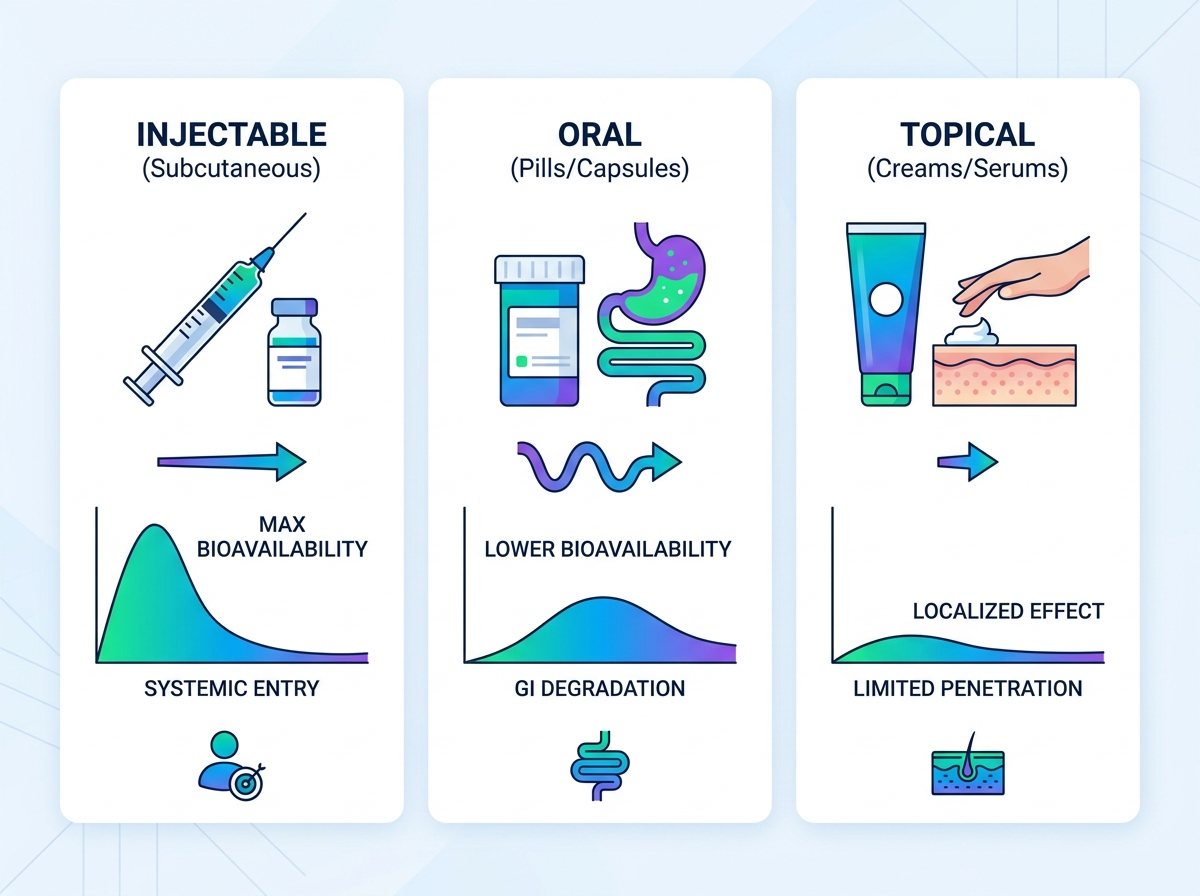
Delivery matters: Injectable peptides typically offer the highest bioavailability; oral and topical formats are viable but have limited absorption parameters.
Safety and compliance: The primary risk factor in peptide therapy stems from unregulated sourcing (e.g., "research-grade" online vendors) rather than the molecular structures themselves.
The Core Mechanism: Bridging the Gap Between Amino Acids and Proteins
To understand these therapies, we must first look at basic biology. Biologically, they are short chains of amino acids. A typical chain contains between two and fifty amino acids. They function primarily as cellular signaling molecules. They bind to specific cellular receptors. Once attached, they instruct your cells to perform specific physiological functions. If a chain grows longer than fifty amino acids, science generally classifies it as a protein.
Many patients mistakenly view peptides as entirely new or experimental. In reality, they are already familiar pillars of modern medicine. Consider insulin, which millions use daily for blood sugar regulation. Insulin is simply a peptide hormone. Another universally understood example includes GLP-1 receptor agonists. These medications provide profound metabolic control. By framing the concept around these familiar anchors, the mechanism becomes much easier to grasp.
Clinicians favor them in therapy for several distinct reasons. They offer remarkably high specificity. Because they target precise receptors, they generally produce fewer off-target effects. They also boast lower toxicity compared to traditional small-molecule drugs. Your body naturally breaks them down into basic amino acids. This natural degradation process makes them ideal candidates for targeted medical interventions.
What Are Peptides Used For? Primary Clinical Applications
The medical community categorizes these compounds based on their targeted physiological outcomes. We can group the primary clinical applications into three main pillars. These include metabolic management, tissue regeneration, and endocrine support.
Metabolic and Weight Management
Metabolic regulation represents the most globally recognized application today. Clinicians frequently prescribe GLP-1 receptor agonists for this purpose. These compounds interact directly with receptors in the pancreas and brain.
Mechanism: They induce delayed gastric emptying. They also regulate crucial appetite signaling pathways in the brain.
Evidence status: These treatments are strictly FDA-approved. They possess extremely high clinical validation. Decades of peer-reviewed data support their metabolic efficacy.
Tissue Repair and Regenerative Medicine
Sports medicine physicians frequently utilize specific compounds for advanced tissue healing. Clinicians actively evaluate compounds like BPC-157 or TB-500 for recovery protocols. They target soft tissue damage, tendon tears, and muscle recovery.
Mechanism: They promote angiogenesis. This is the physiological process of forming new blood vessels. Better blood flow accelerates cellular wound healing.
Evidence status: They currently rely on emerging clinical data. They are widely used in specialized sports medicine. However, utilizing them requires extremely careful provider selection.
Endocrine and Anti-Aging Support
Hormonal decline is a natural part of biological aging. Clinicians sometimes use Growth Hormone Secretagogues to address this decline. Common examples include CJC-1295 and Ipamorelin.
Mechanism: They actively stimulate the pituitary gland. They encourage the gland to produce and release natural growth hormone. They do not replace the hormone directly.
Evidence status: Physicians often prescribe them off-label. They aid in athletic recovery, sleep optimization, and body composition. They require continuous, strict medical monitoring.
The table below summarizes these distinct clinical pathways.
Application Category
Primary Mechanism
Clinical Validation Status
Metabolic Management
Appetite signaling & gastric delay
FDA-Approved, Highly Validated
Tissue Repair
Angiogenesis & accelerated healing
Emerging Data, Off-Label Use
Endocrine Support
Pituitary gland stimulation
Off-Label Use, Requires Monitoring
Evaluating Delivery Methods: Injectable vs. Oral vs. Topical
The therapeutic success of any compound depends heavily on its delivery method. How the molecule enters your bloodstream dictates its ultimate biological impact. Providers typically choose from three primary delivery formats.
Subcutaneous Injections (The Clinical Standard)
Injections remain the gold standard in functional medicine. You inject the compound directly into the subcutaneous fat tissue.
Pros: This route provides maximum bioavailability. It allows for highly precise dosing. The compound achieves rapid systemic entry without gastrointestinal interference.
Cons: Injections often cause severe patient hesitancy. They also require proper storage protocols. Many compounds demand strict cold-chain handling to prevent rapid degradation.
Oral Formulations
Swallowing a capsule appeals to a much broader patient demographic. Pharmaceutical companies are aggressively developing advanced oral formats.
Pros: Oral routes ensure much higher patient compliance. They are entirely non-invasive.
Cons: Stomach acids destroy most unprotected amino acid chains. They are highly susceptible to degradation by harsh gastrointestinal enzymes. This results in much lower bioavailability. They require highly specialized protective chemical formulations to survive the stomach.
Topical Creams and Serums
Dermatologists frequently utilize these molecules for localized aesthetic improvements. Copper compounds are especially popular in modern skincare routines.
Pros: They allow for highly localized application. You can target specific areas for skin elasticity or collagen production in dermatology.
Cons: Topical solutions cannot penetrate deeply enough into the dermis. Therefore, they cannot produce systemic metabolic or deep regenerative physiological effects.
Risk Mitigation: Safety, Compliance, and What Doctors Want You to Know
Even naturally occurring biological mechanisms carry inherent medical risks. When you manipulate cellular signaling, you must anticipate physiological pushback. Understanding these risks is crucial for long-term health.
First, we must acknowledge potential side effects. Patients often report mild to moderate nausea. Injection site reactions, such as redness or itching, are incredibly common. Some protocols can cause a significant impact on blood sugar levels. Prolonged use without monitoring might lead to hormonal feedback loop disruption. Your body might temporarily reduce its own natural hormonal production.
The greatest danger, however, lies in the "Research-Grade" trap. The internet is full of online vendors selling unverified vials. They label these products "not for human consumption" to exploit legal loopholes. Purchasing these unverified peptides online poses a critical danger. They often contain heavy metals, dangerous binders, or incorrect dosages. You must only utilize licensed compounding pharmacies prescribed by a licensed physician.
It is vital to understand the difference between FDA-Approved and Compounded medications. Proprietary FDA-approved drugs undergo rigorous, decade-long safety trials. Bespoke formulations from 503A or 503B compounding pharmacies serve specific off-label patient needs. While legal and strictly regulated, compounded versions lack the standardized proprietary testing of mass-market FDA drugs. Your doctor should clearly explain this legal and safety distinction.
Finally, providers must strictly screen for contraindications. Not everyone is a candidate for regenerative treatments. For example, active oncology patients should strictly avoid specific regenerative therapies. Compounds that trigger angiogenesis or cellular proliferation risks could theoretically accelerate tumor growth. Comprehensive medical screening is completely non-negotiable.
How to Evaluate and Shortlist a Peptide Therapy Provider
Because the functional medicine industry is growing rapidly, provider quality varies wildly. You need a systematic framework to protect your health and financial investment. Use the following criteria to evaluate potential clinics.
Mandatory Evaluation Criteria
Comprehensive Baseline Labs: The provider requires comprehensive pre-therapy lab panels. They must analyze your blood work before ever discussing specific medications.
Detailed Consultations: The clinic provides thorough medical consultations. They should review your medical history deeply. You should never purchase medications through a simple online checkout cart.
Pharmacy Transparency: The provider uses transparent, licensed compounding pharmacies. They must use US-based facilities or strictly regulated regional equivalents. They should willingly provide the pharmacy's credentials upon request.
Red Flags to Avoid
Absurd Guarantees: Flee from providers making guarantees of rapid, extreme weight loss. Reject any clinic promising overnight anti-aging miracles.
No Ongoing Oversight: Avoid clinics that lack ongoing physician monitoring. A good doctor will require follow-up lab requirements every few months.
Excessive "Stacks": Beware of providers pushing high-volume, multi-peptide "stacks." They should not prescribe complex combinations without a highly targeted, individual medical justification.
Conclusion
These advanced compounds represent a legitimate, highly effective evolution in precision medicine. When matched with the correct clinical indications, they can transform metabolic health and accelerate tissue recovery. However, they are not magical cures, and they carry distinct safety parameters. Their efficacy relies entirely on precise dosing, correct delivery methods, and rigorous physician oversight.
If you wish to explore these treatments, follow a strict onboarding path. First, schedule a comprehensive clinical consultation with a board-certified provider. Second, complete extensive diagnostic bloodwork to establish your biological baseline. Finally, establish a strictly monitored, single-variable protocol. Start slowly, measure your physical responses, and adjust only under medical supervision.
FAQ
Q: How long does it take to see results from peptide therapy?
A: Therapeutic timelines vary widely based on the specific application. Metabolic treatments, like GLP-1s, often reduce appetite within the first week. However, visible weight loss usually requires several months. Regenerative protocols for tissue repair may show reduced inflammation within weeks, but complete tendon or muscle healing requires three to six months of sustained treatment.
Q: Are there natural alternatives to synthetic peptides?
A: Yes. You can boost endogenous production through targeted lifestyle choices. Consuming dietary precursors, like high-quality amino acids and collagen-rich foods, provides essential building blocks. Additionally, optimizing deep sleep, engaging in high-intensity interval training, and managing systemic stress can naturally stimulate your body's own hormonal and signaling pathways.
Q: Is peptide therapy covered by insurance?
A: Coverage depends heavily on the specific medication and diagnosis. FDA-approved medications for diagnosed conditions, such as insulin for diabetes, are universally covered. However, out-of-pocket functional medicine approaches, including compounded formulations for anti-aging, sports recovery, or off-label weight management, are almost never covered by standard health insurance policies.
Q: Do you have to take peptides forever?
A: Not necessarily. Usage depends entirely on the underlying health condition. Regenerative treatments for acute injuries utilize cyclical usage; you stop once the tissue heals. Conversely, chronic conditions like severe metabolic syndrome or permanent hormonal decline may require long-term, ongoing management to maintain your desired physiological baseline.