GLP-3 is a synthetic research peptide studied in experimental models involving GLP-1, GIP, and glucagon receptor signaling.
Supplied as a lyophilized powder for laboratory research and analytical use only. Not intended for human or veterinary use, including consumption, injection, topical application, or any diagnostic, therapeutic, or clinical purpose.
GLP-3 is a novel peptide-based drug that functions as a triple receptor agonist, simultaneously targeting GLP-1, GIP, and glucagon receptors. It facilitates weight loss through comprehensive regulation of appetite by enhancing satiety, suppressing hunger, and increasing energy expenditure. Additionally, GLP-3 demonstrates significant improvements in multiple cardiometabolic risk indicators including blood pressure, glycated hemoglobin (HbA1c), fasting blood glucose, insulin levels, total cholesterol, LDL cholesterol, and triglycerides. It also exerts positive effects on patients with non-alcoholic fatty liver disease (NAFLD), normalizing hepatic fat content in the majority of participants.
Compared to single or dual agonists, GLP-3 uniquely activates three receptors (GLP-1, GIP, and GCG) simultaneously, enabling multidimensional regulation of blood glucose and body weight. This multi-target mechanism theoretically allows for more comprehensive improvement of metabolic disorders, demonstrating distinct advantages in weight reduction, amelioration of hepatic steatosis, and normalization of blood glucose levels. The synergistic action of multiple receptors renders GLP-3 more effective than existing GLP-1 receptor agonists or dual agonists in metabolic regulation and weight management, offering a novel therapeutic option for individuals with obesity and type 2 diabetes.
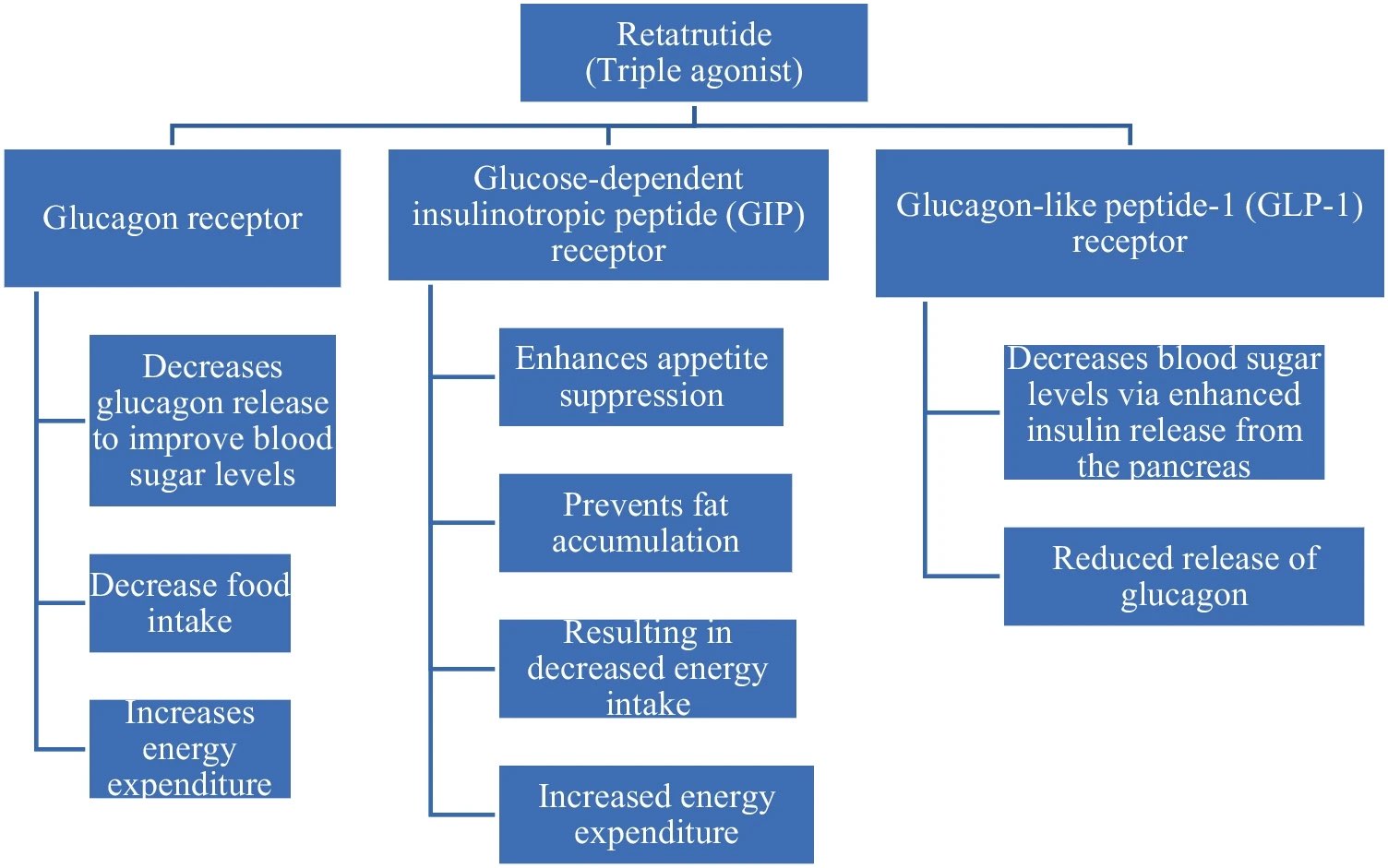
GLP-3 (LY3437943) is an investigational peptide described as a triple receptor agonist at the glucagon-like peptide-1 receptor (GLP-1R), glucose-dependent insulinotropic polypeptide receptor (GIPR), and glucagon receptor (GCGR).[1,2]
Fig1. Schematic representation of the three receptor pathways discussed for GLP-3 in the cited review.[1]
Research Progress
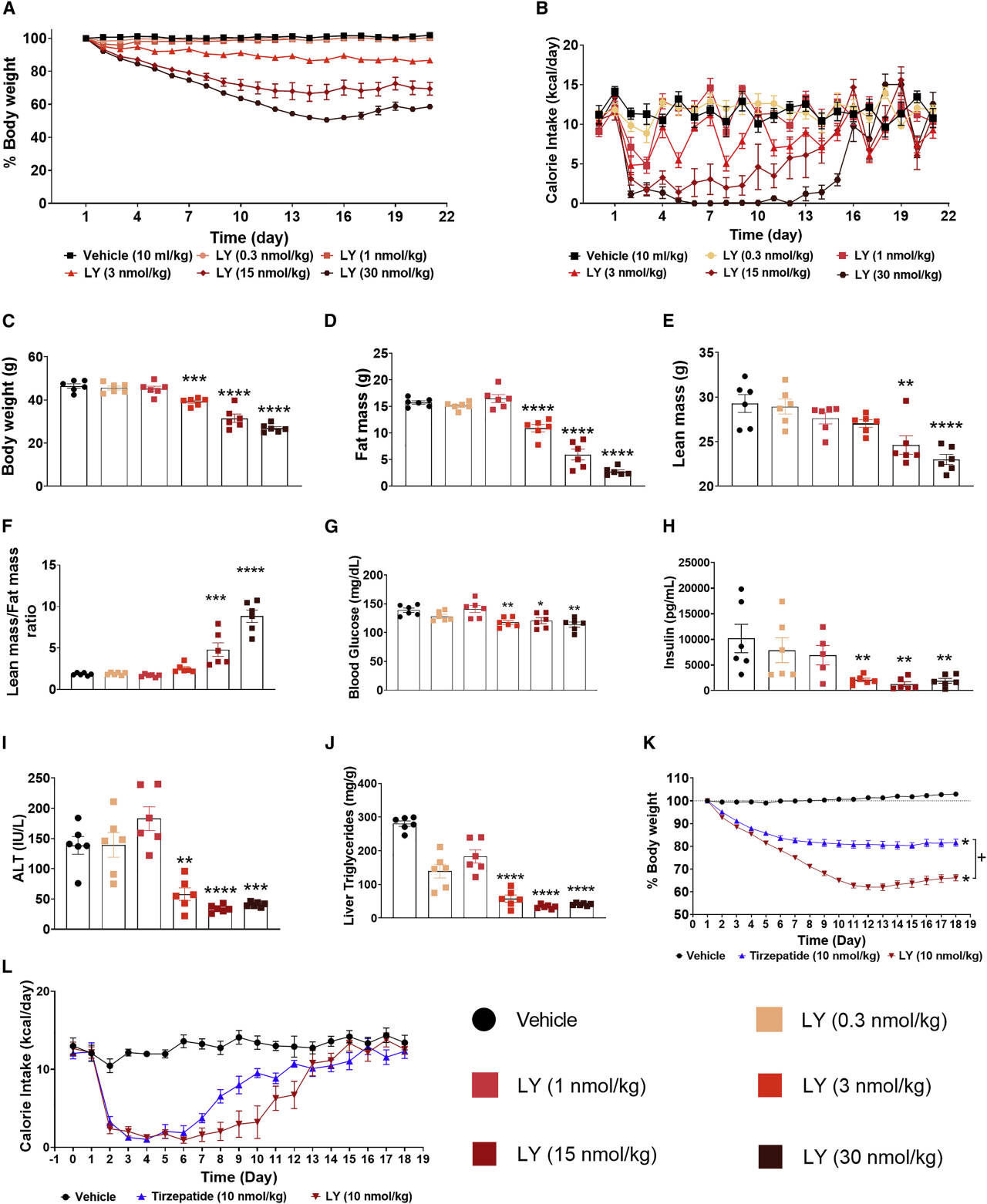
Coskun, Tamer, and colleagues studied GLP-3 in C57/Bl6 diet-induced obesity (DIO) mice. The authors reported dose-dependent changes in body weight, calorie intake, body composition, blood glucose, insulin, ALT, and liver triglycerides. Additional experiments in the same study were used to examine the contribution of GCGR, GIPR, and GLP-1R signaling to the observed preclinical responses.[2]
Fig2. Body-weight, calorie-intake, body-composition, and metabolic endpoints reported for LY3437943 in diet-induced obese mice.[2]
Diet-induced obese mice received once-daily (QD) ascending doses of LY3437943 for 21 days in the cited study.
(A) Change in percentage body weight over time.
(B) Cumulative calorie intake over time.
(C–F) Body composition change in grams at the end of the study: body weight (C), fat mass (D), lean mass (E), and lean/fat mass ratio (F).
(G–J) Metabolic health parameters at the end of the study: blood glucose (G), insulin (H), ALT (I), and liver triglycerides (J).
(K) Comparison of LY3437943 with GLP-2 at the study-specified dose for percentage change in body weight over time.
(L) Comparison of LY3437943 with GLP-2 at the study-specified dose for calorie intake over time.
Data are expressed as mean ± SEM with n = 6 (A–L). Statistical analysis in (C)–(K) was done using one-way ANOVA versus vehicle, with significance defined at p < 0.05. ∗p < 0.05, ∗∗p < 0.01, ∗∗∗p < 0.001, ∗∗∗∗p < 0.0001 versus vehicle, p < 0.05 versus GLP-2. ALT, alanine aminotransferase; LY, LY3437943; SEM, standard error of the mean.+
Li, Wenzhuo, et al. used cryo-electron microscopy to examine GLP-3 bound to GLP-1R, GIPR, and GCGR. The authors reported that the N-terminal region of the peptide interacts with the receptor transmembrane binding pocket, while the C-terminal region contributes to interactions with extracellular receptor regions. The study identified both conserved and receptor-specific contacts across the three receptor complexes.[3]
Joachim Neumann and colleagues examined GLP-3 in isolated human right atrial preparations obtained during cardiac surgery. The authors reported concentration- and time-dependent changes in force of contraction and used receptor antagonists to investigate the involvement of GCGR, GIPR, and GLP-1R. They proposed a cAMP-related signaling mechanism under the conditions of this ex vivo study.[4]
Coskun et al. also reported nonclinical cardiovascular safety studies in cynomolgus monkeys. In a single-dose study, heart rate was higher than concurrent controls after LY3437943 exposure, with the larger study dose producing the greater increase. In a six-month repeat-dose study, higher heart rates were observed during the dosing phase and were described as dose-dependent; changes in systolic and diastolic blood pressure were also reported.[2] These observations were generated under non-human primate study conditions.
Research Limitations
Animal models provide information under defined experimental conditions but cannot fully reproduce the complexity of human physiology. Differences in receptor biology, neuroendocrine adaptation, exposure duration, and downstream signaling may affect translation across species. Findings from receptor assays, structural studies, isolated human tissue, and animal models should therefore be interpreted within the model used and should not be treated as evidence of clinical safety or efficacy.[2,4-6]
COCER Peptides provides GLP-3 solely for laboratory research use and not for human or veterinary use. The material on this page summarizes findings reported in the cited third-party literature and does not make claims regarding clinical efficacy, safety, diagnosis, treatment, prevention, or other human use.
▎Relevant Citations
[1] KAUR M, MISRA S. A review of an investigational drug GLP-3, a novel triple agonist agent for the treatment of obesity[J]. European Journal of Clinical Pharmacology, 2024,80(5):669-676.
DOI:10.1007/s00228-024-03646-0
[2] COSKUN T, URVA S, ROELL W C, et al. LY3437943, a novel triple glucagon, GIP, and GLP-1 receptor agonist for glycemic control and weight loss: From discovery to clinical proof of concept[J]. Cell Diabetes, 2022,34(9):1234-1247.e9.
DOI:10.1016/j.cmet.2022.07.013
[3] LI W, ZHOU Q, CONG Z, et al. Structural insights into the triple agonism at GLP-1R, GIPR and GCGR manifested by GLP-3[J]. Cell Discovery, 2024,10:77.
DOI:10.1038/s41421-024-00700-0
[4] NEUMANN J, AHLREP U, HOFMANN B, et al. Inotropic effects of GLP-3 in isolated human atrial preparations[J]. Naunyn-Schmiedeberg's Archives of Pharmacology, 2026,399(1):317-327.
DOI:10.1007/s00210-025-04421-3
[5] LUTZ T A. Mammalian models of diabetes mellitus, with a focus on type 2 diabetes mellitus[J]. Nature Reviews Endocrinology, 2023,19(6):350-360.
DOI:10.1038/s41574-023-00818-3
[6] TU Q, LIU G, LIU X, et al. Perspective on using non-human primates in Exposome research[J]. Ecotoxicology and Environmental Safety, 2024,286:117199. DOI:10.1016/j.ecoenv.2024.117199.
ALL PRODUCTS, ARTICLES, TECHNICAL MATERIALS, PRODUCT DESCRIPTIONS, AND OTHER INFORMATION PROVIDED ON THIS WEBSITE ARE INTENDED SOLELY FOR LEGITIMATE LABORATORY RESEARCH, INFORMATIONAL, AND EDUCATIONAL PURPOSES.
Products offered by Cocer Peptides are intended exclusively for in vitro and laboratory research and are NOT intended for human or veterinary use, human consumption, clinical use, diagnostic use, therapeutic use, compounding, self-administration, injection, or any other form of administration to humans or animals. These products are not intended to diagnose, treat, cure, mitigate, or prevent any disease or medical condition, nor are they intended to affect the structure or function of the human or animal body. Unless expressly stated otherwise, products offered on this website have not been evaluated or approved by the U.S. Food and Drug Administration (FDA) for human or veterinary use. Any references to published studies, biochemical pathways, molecular mechanisms, or experimental findings are provided solely for scientific discussion and research purposes and do not constitute medical advice, therapeutic claims, dosing guidance, or instructions for use. Purchasers are solely responsible for ensuring that all products are acquired, handled, stored, used, and disposed of in accordance with applicable laws, regulations, institutional requirements, and laboratory safety standards.
Cocer Peptides™ is a source supplier you can always trust.
Monday-Saturday /Except Sunday Orders placed and paid after 12 PM PST are shipped the following business day
Disclaimer: All materials offered by Cocer Peptides are supplied exclusively for legitimate laboratory research, analytical investigation, and in vitro experimental use. They are not offered, labeled, represented, or supplied for human or veterinary administration, consumption, injection, implantation, diagnostic use, therapeutic use, disease prevention, treatment, mitigation, or any other clinical application. Products sold through this website are research materials and are not represented as FDA-approved drug products, medicines, dietary supplements, foods, cosmetics, medical devices, or veterinary products. Cocer Peptides does not provide medical, prescribing, dosing, reconstitution, administration, or clinical-use instructions. Product descriptions, technical information, research articles, references to published scientific literature, and links to third-party materials are provided solely for scientific and educational reference and must not be interpreted as medical advice, treatment recommendations, or evidence of approval for human or animal use. Cocer Peptides does not operate as a pharmacy, does not compound drugs pursuant to patient-specific prescriptions under Section 503A of the Federal Food, Drug, and Cosmetic Act, and is not registered or represented as an outsourcing facility under Section 503B. Purchasers are responsible for ensuring that all materials are acquired, stored, handled, and used only by appropriately qualified personnel in suitable laboratory environments and in accordance with applicable laws, institutional requirements, and safety procedures. As a condition of purchase, the purchaser represents that the materials will not be used in or administered to humans or animals and will not be relabeled, marketed, transferred, or resold for pharmaceutical, therapeutic, diagnostic, clinical, or veterinary purposes. Cocer Peptides reserves the right to refuse, cancel, restrict, or request additional verification for any order where the intended use, purchaser qualifications, destination, or other circumstances are inconsistent with these research-use requirements or applicable law. Additional conditions governing purchase, handling, shipping, liability, and permitted use are set forth in the applicable Terms and Conditions.